Composite vs. Timber Decking: What's the Difference?
Expert Comparison | 2026 Decking Guide
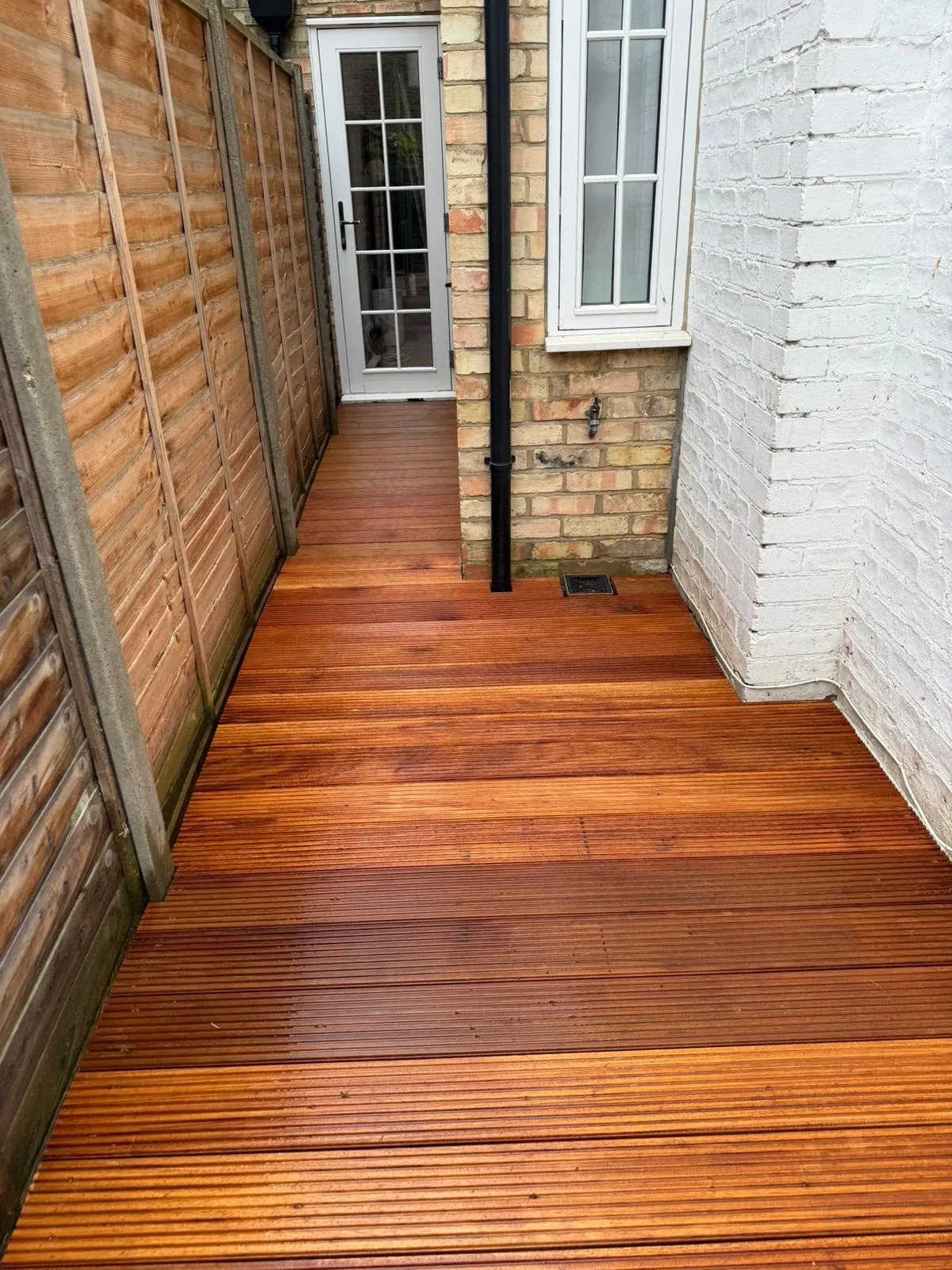
In the urban environments of London, outdoor decking serves as an essential, level extension of your home's living space. However, choosing between traditional softwood, premium hardwood, modified timber, and modern Wood-Plastic Composite (WPC) requires balancing upfront costs against ongoing maintenance and decades of performance in the UK's damp, unpredictable climate.
At The Tree Amigos Landscaping & Gardening Ltd, our carpentry teams build bespoke outdoor platforms across all 32 London boroughs. Below is our complete, practical breakdown of softwood, hardwood, modified timber, and composite decking materials.
Core Comparison: Softwood vs Hardwood vs Modified Timber vs Composite
A head-to-head comparison across the critical technical and practical criteria for London properties:
| Feature | Softwood | Hardwood | Modified Timber | Composite |
|---|---|---|---|---|
| Average Lifespan | 10–15 years (basic pressure-treated); 20–30 years (premium kiln-dried larch/redwood) | 25–45 years (oak/balau/iroko/garapa); 30–70+ years (ipe/cumaru/teak) | 20–30 years (ThermoWood, heat-treated only); 30–60+ years (Kebony, Accoya — chemically/bio-modified) | 20–35 years depending on cap quality; uncapped 10–15, capped 25–35 |
| Upkeep Effort | High: oil/stain every 1–2 years to avoid splitting, warping, algae | Low–Medium: can be left to silver; oil annually to retain colour | Low: occasional clean; optional UV-blocking oil if you want to hold the original colour, otherwise stable and low-maintenance | Very Low: soap & water; capped boards resist stains/fading |
| Splinter Risk | Yes, especially if unsealed or weathered | Low (dense grain), but can check/split if not pre-drilled during install | Low — modification process stabilises the timber, though pre-drilling fixings is still good practice | No (engineered surface) |
| Slip Resistance | Poor when wet/mouldy; algae builds quickly in shade/damp | Moderate; naturally oily species can be slick when wet | Moderate — behaves like natural timber; textured/reeded profiles available | High; many boards have textured/grained surfaces designed for slip resistance |
| UV Resistance | Fades & greys quickly; needs UV-blocking oil to retain colour | Greys naturally; oil slows greying but doesn't stop it fully | Greys naturally like hardwood/softwood unless oiled; the modification itself doesn't degrade, only the surface colour fades | Highly fade-resistant, especially capped composites |
| Heat in Sun | Stays cooler than composite; still warms in direct sun | Similar to softwood; dense timber holds some heat but less than dark composite | Similar to natural timber — stays notably cooler underfoot than dark composite | Holds heat longer; dark colours can reach ~50°C+ on a 25°C day vs ~35–40°C for light tones |
1. Softwood Decking — Deep Dive
Softwood remains the most widespread entry-level decking option across the UK due to its accessibility and low initial purchase price.
Species & Grades
- Common Softwoods: Scots Pine and Spruce pressure-treated with copper-based preservatives to UC3 (above ground) or UC4 (in ground contact) standards.
- Premium Softwoods: Siberian Larch and kiln-dried Scandinavian Redwood. These varieties grow slower in colder climates, resulting in tighter growth rings, greater density, and higher natural resin content that resists decay.
Why It's Cost-Effective
Softwood timber is sourced from fast-growing, widely available coniferous forests. It is lightweight, straightforward to machine, cut, and screw on-site, keeping installation labour swift. Board costs vary by grade, with premium larch or redwood costing more than standard treated pine or spruce.
Maintenance Reality in London Gardens
Softwood requires regular, committed upkeep. Because the wood fibers are relatively soft and porous, unsealed boards absorb moisture easily. In damp or tree-shaded London gardens, microscopic algae and surface moss thrive quickly, transforming the deck into a slick surface during winter months. To prevent warping, splitting, and decay, softwood demands thorough annual washing and a fresh coat of high-grade deck oil or preservative stain every 1–2 years.
Best Suited For: Budget-conscious projects, rental properties, temporary outdoor platforms, or homeowners who genuinely enjoy annual timber maintenance.
2. Hardwood Decking — Deep Dive
Hardwood decking represents the pinnacle of natural timber luxury, prized for its extraordinary structural density, natural oils, and deep, architectural grain patterns.
Species & Performance
- Mid-Tier Hardwoods (25–45 Year Lifespan): European Oak, Yellow Balau, Iroko, and Garapa. Garapa is a lighter, honey-gold hardwood (Brazilian ash) with a finer, more uniform grain than Oak or Balau. Rated durable with a typical service life around 25–45 years, it weathers to silver-grey like other hardwoods if left unoiled—positioning well as the warmer, lighter-toned alternative for clients who want a hardwood deck without the darker tones of Ipe or Cumaru.
- Premium Dense Hardwoods (30–70+ Year Lifespan): Ipe (Brazilian Walnut), Cumaru, and Teak. Teak is the benchmark luxury hardwood, prized for its exceptionally high natural oil content, which gives it superior weather and rot resistance without any chemical treatment. Typically rated for 40–70+ years of outdoor service—the longest-lived species in the natural hardwood range—Teak features golden-to-medium brown tones, feels remarkably smooth underfoot, and ages to an elegant silvery-grey patina. Ipe and Cumaru offer ultra-dense performance with natural fire resistance, Class A ratings, and extreme abrasion resilience.
Installation Craftsmanship
Hardwoods cannot simply be screwed down like softwood. Every screw hole must be precisely pre-drilled and countersunk; driving standard screws straight into Teak, Garapa, Ipe, or Balau will instantly snap screw heads or cause surface checking. Because hardwood boards are significantly heavier, they require a rigid, heavy-duty C24 strength-graded timber subframe built with closer joist centers, increasing initial installation craftsmanship.
Aesthetics & Ageing
Hardwood starts with an opulent palette ranging from honey-gold (Garapa, Teak) to rich reddish-brown and deep walnut (Balau, Cumaru, Ipe). Under UV radiation, it will naturally weather to an attractive, silvery-grey patina over 6–12 months. Homeowners who wish to preserve the vibrant original wood tone can apply a dedicated UV-blocking penetrating oil annually, while those who appreciate the architectural grey patina can leave it with simple occasional washing. If you've settled on timber and want to know which finish is right for your timber deck — oil, stain or paint, and why paint is discouraged on dense hardwoods — see our independent decking oil, stain and paint guide.
Best Suited For: High-end natural-look gardens, period properties, clients who value authentic timber character and longevity — Teak for the longest-lived, most premium option; Garapa for a lighter-toned hardwood at a more moderate point in the range.
3. Composite Decking — Deep Dive
Wood-Plastic Composite (WPC) and mineral-resin boards (such as Millboard and Trex) engineer out the inherent weaknesses of natural timber while capturing its warm visual appeal.
Construction Types: Uncapped vs. Capped WPC
- Uncapped Composite (10–15 Year Lifespan): Early-generation composite consisting of an exposed mix of wood flour and plastic. More susceptible to staining from wine or BBQ grease, surface scratching, and UV fading over time.
- Capped Composite (25–35 Year Lifespan): Modern boards featuring a high-density core wrapped in a co-extruded polymer protective shell (or Millboard's wood-free Lastane elastomer layer). Highly impervious to grease, wine, red clay staining, scratching, and UV bleaching.
Board Profiles: Hollow vs. Solid
- Hollow Boards: Feature internal tubular chambers to reduce weight and material cost. Requires end-caps or fascia picture-framing to conceal the hollow ends, and can sound slightly more resonant underfoot.
- Solid Boards: Solid core construction throughout. Provides the substantial, quiet feel of genuine hardwood underfoot, handles higher point loads, and permits clean mitred border detailing.
Heat Behaviour in Direct Sunlight
Because composite contains polymers and dense mineral resins, it absorbs and retains solar heat longer than open-grained timber. On a 25°C London summer day in unshaded south-facing gardens, dark charcoal composite can reach surface temperatures of ~50°C+, whereas light grey, cream, or natural oak tones remain around ~35–40°C. For unshaded family decks where children or pets walk barefoot, we recommend selecting lighter colourways, integrating timber pergola shade structures, or planning mature canopy planting.
Best Suited For: Low-maintenance family gardens, busy professionals, split-level sloping plots, and clients seeking a "fit and forget" outdoor living space that never requires sanding or oiling.
4. Modified Timber Decking — Deep Dive
Fast-growing, sustainably farmed softwood (such as Nordic pine or radiata pine) that has been permanently modified — by heat, chemical acetylation, or a bio-based liquid treatment — to behave like a much denser, more durable hardwood. It isn't a coating or surface treatment; the modification changes the timber all the way through, so the improved durability doesn't wear off.
Types of Modified Timber
- Heat-Treated Timber (e.g. ThermoWood): Nordic pine treated with heat and steam only — no chemicals added. Typically rated for around 20–30 years above ground. Darkens to a honey-brown tone, weathers to silver-grey, and moves and resins far less than untreated softwood.
- Chemically & Bio-Modified Timber (e.g. Accoya, Kebony): Softwood modified through the full cross-section (acetylation, or a bio-based liquid process), giving it hardwood-level decay resistance and dimensional stability. Independent testing (BRE and equivalent bodies) rates these products for significantly longer service life than heat-treated timber alone — typically quoted in the 30–60+ year range above ground, depending on the specific product.
Maintenance Reality
Lower-maintenance than natural hardwood or softwood — no rot risk to manage, minimal movement, and only an occasional clean needed. Left untreated it will silver to grey like any timber; a UV-blocking oil keeps the original tone if that's preferred.
Aesthetics & Ageing
Starts anywhere from pale (Accoya, ThermoWood) to a rich brown (Kebony), and all three weather to a silver-grey patina over time, same as natural hardwood.
Best Suited For: Clients who want hardwood-level longevity and stability without tropical hardwood sourcing, or who want a lower-maintenance deck than natural softwood without the look or price point of composite. A strong option to offer alongside hardwood for sustainability-conscious clients.
5. Lifetime Cost Perspective (UK 2026)
When evaluating decking options, looking purely at the initial installation invoice is misleading. Factoring in recurring maintenance costs, deck oils, pressure-washing, and replacement lifespans gives a clearer 20-year financial view:
- Standard Softwood: The lowest initial install cost, but over a 20-year horizon basic softwood will typically need replacing at least once, plus annual deck stains and strippers — recurring costs that add up over two decades.
- Mid-to-Premium Hardwood: A higher upfront investment, but well-built Balau, Garapa, Teak, or Ipe easily endures the full 20+ years on a sound subframe, needing only periodic oiling rather than a full rebuild.
- Modified Timber: A mid-to-premium upfront cost, with one install often lasting 30–60+ years depending on the product — typically the lowest lifetime cost per year of any option, even though the material itself costs more than standard softwood.
- Capped Composite: A premium upfront cost, but built on an engineered, ventilated subframe, one single installation provides 25–35 years of service with virtually zero recurring maintenance spend.
The Lifecycle Takeaway: While softwood appears half the price on day one, once you factor in a second replacement build and two decades of preservative treatments, it often ends up costing the same as premium composite or modified timber—with considerably more weekend labour and garden downtime.
6. Eco & End-of-Life Notes
- Softwood Sustainability: Exceptionally sustainable when sourced from certified FSC or PEFC plantations. Softwood trees grow rapidly, sequester carbon, and untreated wood can be cleanly chipped, composted, or incinerated at end-of-life.
- Hardwood Environmental Impact: Tropical hardwoods are slow-growing. Ensure your contractor verifies 100% legal, certified FSC/PEFC supply chains to avoid deforestation. The 30–70+ year service life helps offset the harvesting footprint.
- Modified Timber Sustainability: Starts as fast-growing, certifiable softwood rather than slow-growing tropical hardwood, so sourcing pressure is much lower — check for FSC/PEFC certification same as any timber. End-of-life handling depends on the modification process; heat-treated products can generally be chipped or burned like softwood, chemically modified products should be checked against local disposal guidance.
- Composite Recycling & Waste Diversion: Premium composites actively divert post-consumer plastic bottles and reclaimed timber sawdust from landfills. However, because wood fibers and polymers are fused, end-of-life recycling is currently difficult in municipal facilities.
7. Practical Decision Prompts: Which Is Right for You?
Budget vs. Longevity
Tight budget and happy with annual maintenance? Choose Softwood. Desire authentic natural character and multi-decade life? Choose Hardwood. Want a long-term "fit and forget" solution? Choose Capped Composite.
Sun Exposure & Barefoot Use
Unshaded, south-facing gardens with barefoot children or pets benefit from Hardwood, Modified Timber, Scandinavian Redwood, or light-toned Composite (e.g. cream/light oak) to avoid high summer heat absorption.
Maintenance Tolerance
If you enjoy garden woodwork and annual oiling, Garapa, Teak, Balau, or Ipe is unrivaled. If you want zero sanding, staining, or sealing, Millboard, Trex, or Modified Timber is the clear winner.
Property Timeline
For short-term property refreshes or rental lets, treated softwood provides quick curb appeal. For your forever family home, capped composite, modified timber, or hardwood maximizes return on investment.
Eco Sourcing & Longevity
Want hardwood-level longevity without tropical sourcing? Choose Modified Timber (Kebony, Accoya, ThermoWood).
8. The Foundation: Why the Subframe Dictates Longevity
At The Tree Amigos, we frequently inspect decks where homeowners invested in premium surface boards only to lay them over an unventilated, sub-standard timber frame. If the frame rots from trapped ground damp, the entire deck fails prematurely.
Every deck we construct is built upon a heavy-duty C24 strength-graded timber subframe (or composite / recycled plastic joists for low-ground-clearance plots). We install geotextile weed membranes, adjustable structural pedestals, and joist protection tapes to ensure complete cross-flow ventilation and water runoff.
Ready to Plan Your London Decking Project?
Founders Billy Maddox and Vincent O'Connell provide free on-site consultations across all 32 London boroughs. We'll bring board samples of Millboard, Trex, and Balau hardwood so you can feel the textures and compare tones in your own garden.
Book Your Free Consultation